

Audience analytics$975 USD
Audience Measurement
Measure viewing time and gaze-based attention around a display, with facial expression estimates. Build the results into your own analytics.

May I use Google Analytics to understand which pages and demos are useful? It’s optional. You can change your choice anytime in the footer. About cookies
Independent computer vision engineering
I’m Antal. I build C++ and OpenCV engines you can try in your browser, understand through the documentation, and integrate into your own product.
Commercial use · Digital delivery · Built for independent integration
An introduction to my work and the engines you can build on. Watch on YouTube ↗
The project collection
Choose the capability or dataset you need. Evaluate the demo or sample, review the contents, then build on the work.
Measure viewing time and gaze-based attention around a display, with facial expression estimates. Build the results into your own analytics.
Add action-based liveness checks to your face verification flow. Ask for blinks or head turns and check the response.
Detect, track and re-identify faces in video. Start with a working C++ engine and adapt the matching to your application.
Evaluate a neural-network approach to detecting photo and screen presentation attacks in a face verification workflow.
Estimate head pose and eye gaze direction from a webcam, with facial landmarks and eye openness measurements.
Classify visible facial expressions in a camera feed and explore the estimates in your own visualization or analytics.
Map your own 2D makeup designs onto a tracked 3D face mesh, with a working browser demonstration.
Explore contactless pulse estimation from subtle facial color changes using remote photoplethysmography (rPPG).
17,280 prompt-generated webcam images across 12 categories, with original sheets, prompts and companion source code. For research and training experiments; no trained model included.
The engine packages above include live demos, public code documentation and downloadable source. The dataset has a free image sample and a companion case study. Self-serve purchase; support and custom integration are not included. What to know before buying.
From demonstration to implementation
A working demonstration is the starting point. The featured engine packages give your team the implementation and materials to understand it, compile it and make it your own.
A self-serve path
Open a live demo. Check the result with your camera, lighting and distance. Read the engine’s capabilities and limitations.
Review the public documentation, package contents, license and support policy. Confirm that your team can handle the integration.
Purchase through the shop and receive your download links. Compile, adapt and validate the source in your own environment.
A good fit for technical founders, developers and engineering teams. You should be comfortable compiling C++ and working with OpenCV. The projects are engineering foundations; production integration, testing and ongoing maintenance are yours to manage.
Get to know the work
Explore a smaller project before choosing an engine. The same license applies to free downloads.
Free download
Neural network–powered tool that segments and pixelates people in real time to protect privacy
Free download
WebAssembly app clustering camera pixels to reveal the scene’s dominant colours and HEX codes
Free download
This model detects the wearing / non-wearing or improper wearing of a medical mask
Free download
This model detects potholes on the road
Free download
This model detects handguns
Free download
An older standalone model for face presentation-attack experiments, with a Windows demo to evaluate it.
Free download
Detect pupil, iris and sclera bounding boxes in cropped eye images. Includes a link to the Windows demo.
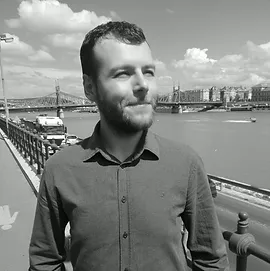
The engineer behind the engines
I’m Antal Zsiros, a computer vision engineer in Hungary. My work spans image processing, embedded vision, automotive navigation and face analysis, with projects going back to 2012.
Antal.Ai is my independent engineering workshop. I develop these projects alongside my professional work because I enjoy solving the problems behind them. Clear documentation, working demos and honest boundaries are how I make that work useful to you.
Antal Zsiros
Clear expectations
Source access, commercial use and integration responsibilities, explained up front.
A self-serve digital project for developers. The engine packages include C++ source code, pretrained models, documentation and build instructions. These are foundations for your own application; you handle integration and production validation. Standalone model downloads have their own package contents.
Yes. You can modify the software and incorporate it into your own product that adds substantial value. You may sell that product, but may not publish the supplied source code or resell the software as a standalone library, SDK, toolkit or template. Read the full software license (PDF).
The featured engines use C++ and OpenCV; their browser demos are compiled with Emscripten to WebAssembly. Native desktop, server, mobile or edge deployment requires the appropriate OpenCV build and project configuration. A browser demo does not establish compatibility or speed on your target device.
No. These are self-serve products for people who can work with C++ and OpenCV. Installation, integration, optimization and custom development are not included. Updates may be released at my discretion, with no maintenance schedule or response-time guarantee. Read the support policy.
Earlier engineering work
These project pages document earlier work. They are not offered as complete, supported systems in the shop.
See what works for your use case before you commit.


